 KidCue
Visual schedule for kids
Visual Schedule for Kids: what it is, why it works, and how to use it.
A visual schedule shows kids their day in pictures and time they can see. It helps with routines, transitions, and time awareness—especially for kids with ADHD or autism, and any child who needs clearer structure.
What is a visual schedule?
It’s a tool that shows activities and time visually instead of relying only on spoken instructions. Kids see what’s happening now and what comes next, which reduces confusion and stress.
Why visual schedules work for kids
Many kids find abstract time cues hard—“five more minutes” means little if they can’t picture it. Visual schedules reduce verbal reminders, make routines predictable, lower anxiety, and support executive function by externalizing time and steps.
Visual schedules for ADHD and autism
Clear structure, visual support over verbal instruction, and consistent cues are widely used in special education and therapy. They help ADHD and autistic kids regulate, but also benefit many young children who struggle with transitions.
How to use a visual schedule at home
- Start with morning or bedtime—short routines that repeat daily.
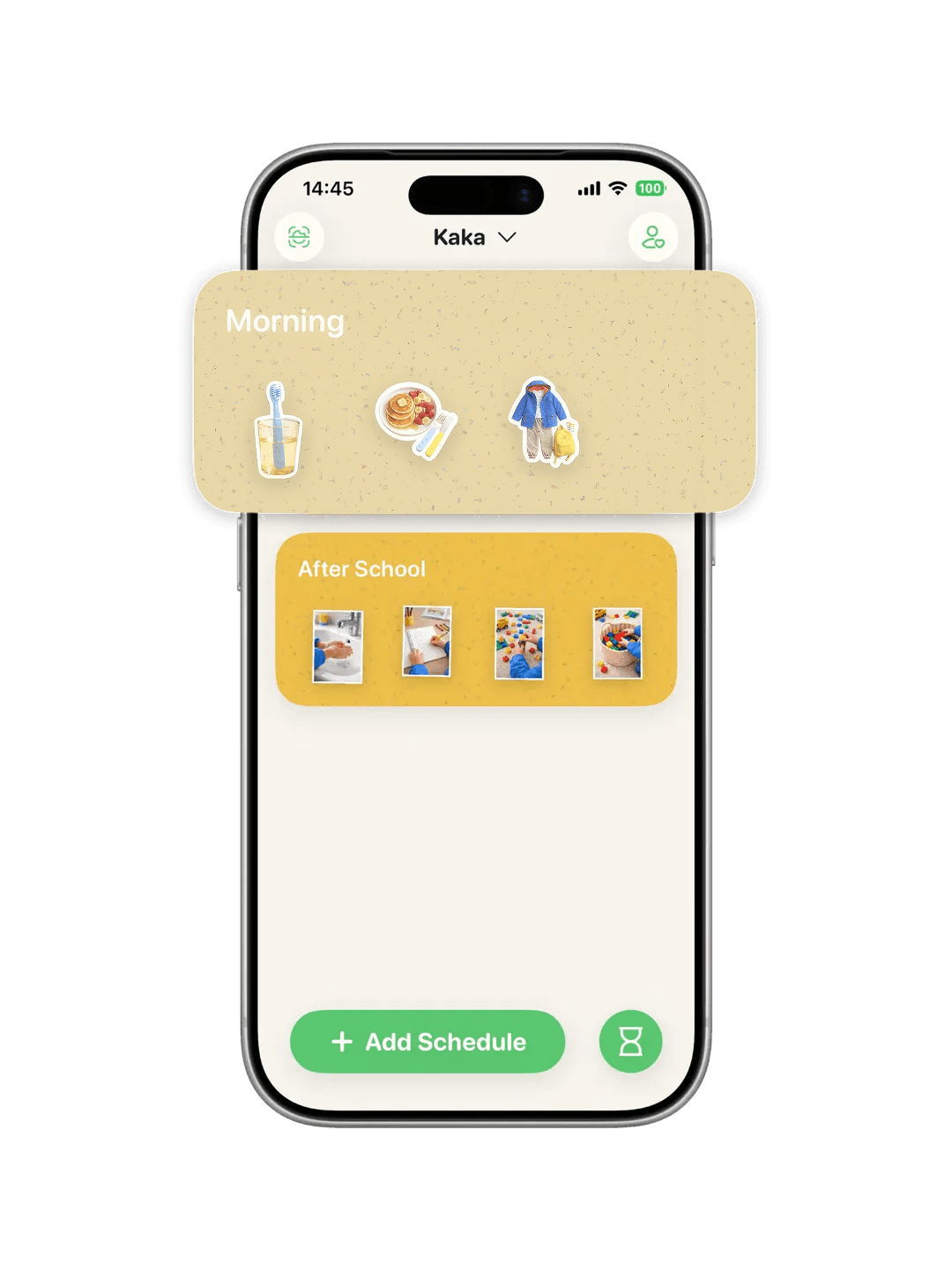
- Use real objects or photos your child recognizes to make steps concrete.
- Keep transitions predictable: show what’s now and what’s next.
- Use gentle cues instead of loud alarms to avoid startle or stress.
- Repeat daily; consistency is what builds independence.
Visual schedule app for kids (KidCue)
KidCue makes time visible with real-object visual cues, calm visuals, and soft sounds. It’s built for ADHD/autistic kids and any child who benefits from structure—covering getting ready, homework, brushing teeth, and transitions.
Visual schedules for everyday routines
Morning and bedtime routines, homework/study time, waiting periods, and calm-down moments become clearer when shown visually. Parents often notice fewer power struggles and smoother transitions.
Gentle cues support smoother transitions
KidCue uses soft, friendly sounds instead of harsh alarms, helping kids move between activities without emotional spikes. Parent mode keeps edits locked so kids can focus on following the plan.
Frequently asked questions
Is a visual schedule good for kids with ADHD?
Yes. Visual schedules reduce verbal reminders and make transitions predictable, which helps kids with ADHD stay regulated and focused.
How do visual schedules help children with autism?
They provide clear structure, visual cues, and consistent flow—approaches widely recommended in special education and therapy for autistic children.
What age is a visual schedule for?
Toddlers through early elementary can benefit. Younger kids see what’s next; older kids build independence and manage time between activities.
Do visual schedules work for toddlers?
Yes. Keep steps short, repeat daily, and use gentle cues instead of loud alarms so toddlers can follow without overwhelm.
What routines fit a visual schedule?
Morning and bedtime, homework, transitions, waiting periods, and calm-down moments all become clearer when shown visually.